Fireworks, Flowers and Fortune: A Guide to Lunar New Year in Hong Kong
From flower markets and fireworks to lion dances and lucky lai see, here's everything you need to know about spending Lunar New Year in the city.

If you can time a trip to Hong Kong around Lunar New Year, you absolutely should and it’s worth going out of your way for. The city transforms for the occasion, with crimson lanterns and blossoms in every street, incense drifting from packed temples, and a sense of community and festivity among locals. Celebrations typically run for around two weeks, beginning in the days before New Year's Day and carrying through to the Lantern Festival on the 15th day, though the main events happen in the first few days.
Lunar New Year falls on a different date each year, usually between late January and mid-February, depending on the lunar calendar. The Year of the Snake began on 29 January 2025, and in 2026 celebrations started on 17 February for the Year of the Horse. If you’re overwhelmed with what to do, we’d recommend simply soaking up the atmosphere, but our top highlights below are a good place to start.

Browse the flower markets
In the week leading up to New Year's Day, flower markets pop up across the city and they're one of our favourite parts of the whole festival. The largest is at Victoria Park in Causeway Bay, where stalls sell armfuls of fresh blooms alongside fruit, snacks and entertainment. Fresh flowers signify health, prosperity and growth, and each variety carries its own meaning: moth orchids for good luck, lucky bamboo for family joy, and winter jasmine for good fortune.
The second largest market is at Fa Hui Park in Mong Kok, one of several that spring up across Kowloon. Get there early in the evening for the best selection, or go on the final night when vendors slash prices and the atmosphere gets lively.

Watch the night parade
Hong Kong's annual Lunar New Year night parade is one of the biggest events of the season. Floats and performers from more than a dozen countries make their way through Tsim Sha Tsui, beginning at the Hong Kong Cultural Centre Piazza and continuing along Canton Road and Nathan Road. There's usually a pre-parade street party with live music and lion dancing. Ticketed viewing zones tend to sell out quickly, but you can watch for free along the route. After the parade, the floats are typically displayed at Lam Tsuen Wishing Square in Tai Po, where you can also visit the famous wishing trees and hang a wish for the new year.
Catch the fireworks over Victoria Harbour
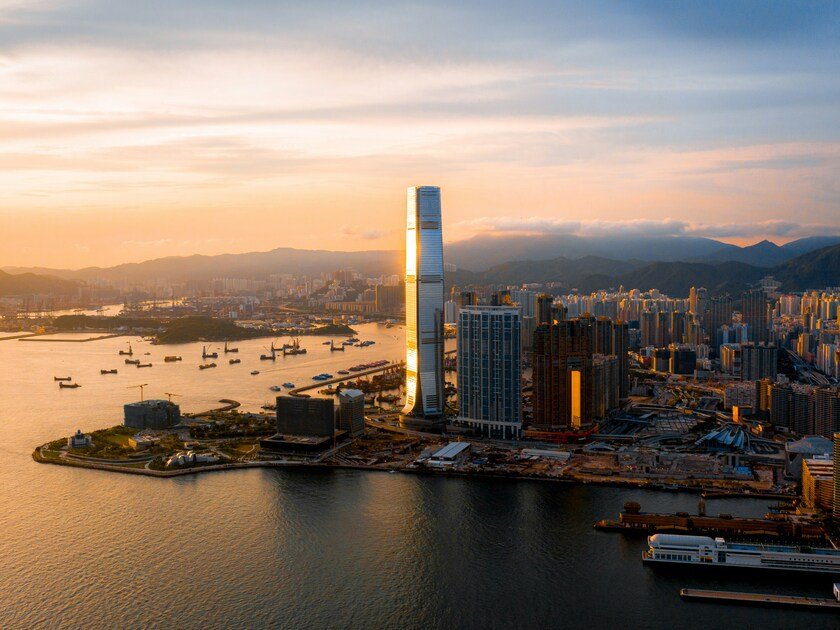
On the second evening of the new year, a fireworks display lights up both sides of Victoria Harbour. It's free to watch and the whole waterfront fills up, so arrive early if you want a clear view. For something more comfortable, several rooftop bars and restaurants along the harbour offer premium vantage points, but we’d advise booking well in advance.

See the lion dances
Lion dances take place across the city throughout the festival, but one of the most famous is The Peninsula's annual performance, which has been running for more than 40 years. Nine lions and a dragon perform in front of the hotel on New Year's Day, symbolising prosperity and good fortune. A second performance usually takes place a few days later. Beyond The Peninsula, you'll spot lion dances in shopping centres, temples and public squares throughout the celebrations, and in Ngong Ping Village on Lantau.
Visit the temples
Burning incense at a local temple on New Year's Day is a deeply important tradition, and the largest gathering takes place at Sik Sik Yuen Wong Tai Sin Temple, where thousands arrive in the early hours to offer prayers for the year ahead. Man Mo Temple in Sheung Wan and Che Kung Temple in Sha Tin are popular, with the latter drawing particularly large crowds on the second day of celebrations.

Head to the races
The Chinese New Year Raceday at Sha Tin Racecourse is one of Hong Kong's most significant annual fixtures. Alongside the racing itself, there are lion dance performances, entertainment and live music. Our top tip? Visitors can typically enter the public enclosure for free by showing a valid travel document at both Sha Tin and Happy Valley.
What to eat
Restaurants across Hong Kong serve special Lunar New Year menus during the festival period, and many luxury hotels put together elaborate celebratory dining experiences. Traditional dishes to look out for include turnip cake, whole steamed fish (symbolising abundance), dumplings and glutinous rice cake. If you’re thinking about a reservation, it’s probably already too late, so make sure to get in quick.

Practical tips
Lunar New Year is a public holiday in Hong Kong, so expect some closures in the first few days, particularly at smaller shops and local restaurants. Major hotels, malls and tourist attractions generally stay open. The main areas around the parade route and harbour get extremely busy on the first two evenings, so plan your route ahead and be prepared for crowds. If you're visiting during this period, exchanging lai see (red envelopes containing money) is a key tradition; many hotels provide even complimentary envelopes for guests.